For travelers who want to see more than Bali’s famous beaches, resorts, and nightlife, an east bali tour package can be a practical starting point for discovering a very different side of the island. While South Bali is often the first choice for visitors, the eastern part of Bali offers ancient temples, royal water gardens, mountain scenery, traditional villages, rice terraces, and quiet coastal landscapes that reveal a deeper side of Balinese culture.
There is nothing wrong with spending time in Kuta, Seminyak, Canggu, Nusa Dua, or Uluwatu. These destinations have helped make Bali one of the world’s most popular holiday islands.
But staying entirely in the south can mean missing some of the experiences that make Bali more than a beach destination.
That is where East Bali comes in.
Located mainly around Karangasem and its surrounding areas, the eastern part of the island offers a noticeably different travel experience. The pace is generally slower, the landscapes are more rural, and cultural attractions are closely connected to the communities that surround them.
For travelers willing to go beyond the familiar routes, East Bali can feel like discovering another chapter of the same island.
The Bali Many First Time Visitors Never See
Bali is often introduced through its most recognizable images: beaches at sunset, tropical cafés, beach clubs, luxury resorts, and crowded tourist streets.
Those images are real, but they represent only one part of the island.
East Bali provides a different perspective.
The Karangasem region is home to destinations such as Tirta Gangga, Taman Ujung, Lempuyang, Amed, Tulamben, and Tenganan. These places represent a combination of cultural heritage, natural scenery, traditional communities, and coastal landscapes. The Karangasem tourism authority also highlights many of these destinations as important attractions within the region. (tourism.karangasemkab.go.id)
What makes the area particularly interesting is the relationship between tourism and everyday life.
Traveling through East Bali means passing rice fields, village roads, temples, traditional houses, and agricultural landscapes. Instead of seeing tourism infrastructure at every turn, visitors often have more opportunities to observe the environment and local communities.
It is a side of Bali that can easily be overlooked when an itinerary focuses only on the island’s most popular southern destinations.
East Bali Has a Different Rhythm
One of the most noticeable differences between South Bali and East Bali is the pace of travel.
Southern Bali is built around convenience. Restaurants, hotels, shopping areas, entertainment venues, and attractions are often concentrated within busy tourist zones.
East Bali feels more open.
The countryside around Sidemen is a good example. Green rice terraces stretch across valleys, traditional villages sit among the landscape, and Mount Agung often provides a dramatic backdrop.
The experience is less about moving quickly between attractions and more about appreciating the surroundings.
A simple walk through a rural area can become part of the journey. Travelers may see farmers working in the fields, small temples beside village roads, irrigation channels, and traditional ceremonies taking place in the community.
For people interested in slow travel, these moments can be just as memorable as visiting a famous landmark.
Ancient Temples and Sacred Landscapes
East Bali is also an important destination for travelers interested in Balinese culture and spirituality.
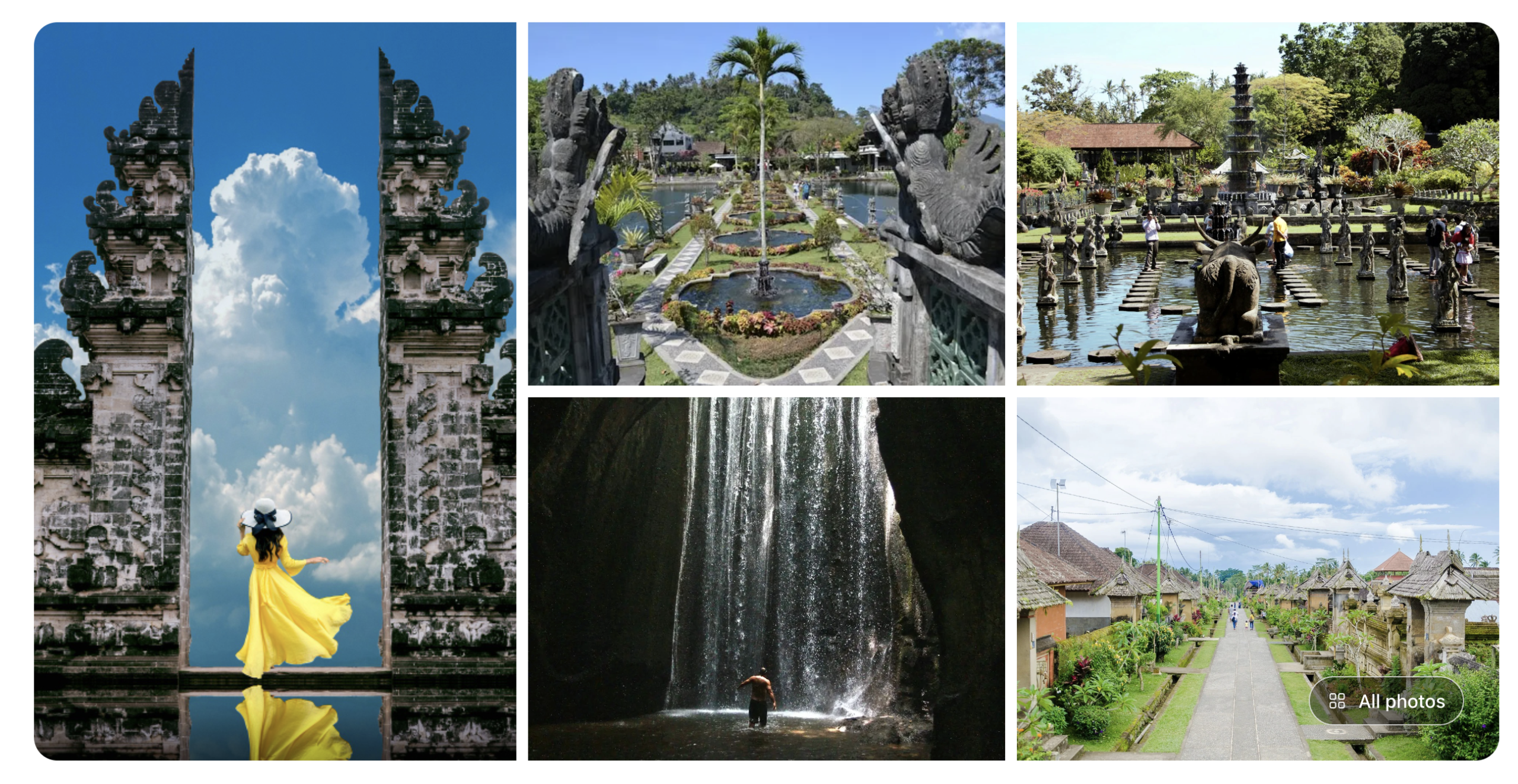
Lempuyang Temple is one of the region’s most recognizable destinations, while Besakih Temple stands on the slopes of Mount Agung and is widely regarded as Bali’s largest and most important temple complex.
However, these locations are more than scenic backgrounds for photographs.
Balinese temples remain active places of worship. Their architecture, offerings, courtyards, ceremonies, and surrounding landscapes are connected to the island’s Hindu traditions.
Understanding this context can make a visit much more meaningful.
Instead of simply arriving, taking photographs, and leaving, travelers can pay attention to the details around them. Temple architecture, ceremonial decorations, local offerings, and the behavior of worshippers can provide insight into how religion remains integrated into daily life in Bali.
This cultural dimension is one of the reasons East Bali stands apart from a conventional resort holiday.
Tirta Gangga and the Legacy of Karangasem
East Bali also offers an opportunity to explore Bali’s royal history.
Tirta Gangga is one of the most recognizable examples. Located in Karangasem, the former royal water palace was built in 1948 by Anak Agung Anglurah Ketut Karangasem Agung. Its gardens combine pools, fountains, sculptures, pathways, and architectural elements influenced by Balinese and Chinese traditions. (Indonesia Travel)
The attraction is visually impressive, but its historical background adds another layer to the experience.
Water is central to the design. Visitors walk across stone paths surrounded by ornamental pools while fountains and sculptures create a carefully arranged garden landscape.
Taman Ujung provides another glimpse into the history of the former Karangasem kingdom.
Together, these destinations demonstrate that East Bali is not simply about natural scenery. Its architecture and history are equally important parts of the region’s identity.
Rice Fields, Villages, and the Beauty of Sidemen
Some of East Bali’s most rewarding experiences do not necessarily involve famous attractions.
Sidemen illustrates this perfectly.
The area is known for its rice terraces, green valleys, traditional villages, and views toward Mount Agung. It has become increasingly popular among travelers looking for a quieter alternative to Bali’s busier destinations.
The appeal is largely found in the landscape.
A morning walk can reveal farmers tending rice fields, traditional homes surrounded by vegetation, small temples, and narrow paths running through rural communities.
There is no need to rush.
Travelers can stop to enjoy the scenery, learn about local agriculture, or simply appreciate the quieter atmosphere.
This is where the idea of slow travel becomes particularly relevant. Instead of trying to visit ten attractions in a single day, visitors can focus on a smaller number of places and experience them more deeply.
East Bali Is More Than Temples
It would be a mistake to think of East Bali solely as a destination for temple visits.
The region offers considerable variety.
Along the coast, Amed is known for its beaches, traditional fishing communities, snorkeling, and diving. Tulamben is another well known destination for underwater experiences, particularly around the USAT Liberty shipwreck.
Further inland, travelers can find rice terraces, mountains, waterfalls, villages, and cultural attractions.
The Karangasem tourism authority lists destinations including Amed, Tulamben, Tenganan, Tirta Gangga, Taman Ujung, and various natural and cultural attractions throughout the region. (tourism.karangasemkab.go.id)
This diversity means East Bali can appeal to different types of travelers.
Nature lovers can explore the countryside and coastline. Culture enthusiasts can visit temples and traditional villages. Photographers can find constantly changing mountain, rice field, and coastal scenery. Travelers seeking a quieter holiday can simply enjoy the slower pace.
How to Explore East Bali Without Rushing
The biggest challenge when exploring East Bali is not finding places to visit. It is deciding how many places to include.
The region covers a large area, and travel times can become significant when visitors attempt to combine distant attractions in a single itinerary.
A more comfortable approach is to organize destinations according to their location and allow enough time for each stop.
Transportation also matters.
Visitors staying in South Bali may need several hours of driving to reach eastern attractions, depending on their starting point and destination. Having a private driver or organized itinerary can make the journey more comfortable and allow travelers to focus on the experience instead of constantly checking directions.
Most importantly, travelers should avoid treating East Bali as a checklist.
The region is best experienced when there is enough flexibility to stop at a scenic viewpoint, spend longer at a cultural site, or simply enjoy the road between destinations.
Why East Bali Deserves a Place on Your Bali Itinerary
The strongest reason to visit East Bali is not simply that it is quieter than some of Bali’s better known tourist areas.
It is because the region reveals a more complete picture of the island.
Royal water gardens tell stories about Karangasem’s past. Temples connect modern communities with centuries of spiritual traditions. Rice terraces demonstrate the importance of agriculture. Traditional villages preserve cultural practices, while coastal communities provide a glimpse into another aspect of Balinese life.
The landscape is equally diverse.
Within a relatively broad area, travelers can encounter mountains, rice fields, forests, temples, royal gardens, traditional villages, and beaches.
For a first time visitor, South Bali can be an easy introduction to the island.
But traveling farther east can change how Bali is understood.
Instead of seeing Bali only as a tropical holiday destination, visitors begin to recognize the island as a place where culture, spirituality, agriculture, history, and tourism exist alongside one another.
That perspective can make a trip feel considerably more meaningful.
A Different Way to Experience Bali
Bali does not have to be experienced through the busiest destinations.
For travelers willing to drive beyond the familiar tourist routes, East Bali offers a slower and more varied experience. The region combines cultural landmarks with rural landscapes and coastal communities, creating opportunities to see aspects of Bali that may not appear in a typical first time itinerary.
The journey may take more time than staying around the southern resort areas.
But that is also part of the experience.
Sometimes the most memorable moments are not found at the destination itself. They happen while driving through a village, watching the landscape change, discovering a small temple, or seeing Mount Agung appear beyond a stretch of rice fields.
That is what travelers can miss when they only explore South Bali.
And for those willing to look beyond the island’s familiar tourist image, East Bali offers plenty of reasons to keep going.