There are monarchies that survive because they control armies.
There are monarchies that survive because they control narratives.
And then there is the Yogyakarta Sultanate — which survives because it controls something far more subtle: meaning.
Founded in 1755 after the Treaty of Giyanti split the Mataram Kingdom into Surakarta and Yogyakarta, the Sultanate of Yogyakarta was not born in peace. It was born in negotiation. Which already tells you something about its personality.
It did not begin with fireworks.
It began with compromise.
A Kingdom Inside a Republic
Indonesia is a republic. This is not controversial. It’s written in the constitution. It’s printed in textbooks. It’s shouted enthusiastically every August 17th.
And yet, within this republic stands a sultanate that still exists — not as a decorative relic, but as a functioning cultural and political entity.
The reigning monarch, Hamengkubuwono X, is not only the Sultan of Yogyakarta but also the Governor of the Special Region of Yogyakarta.
Which is fascinating.
Because in most modern countries, monarchy and democracy have an awkward relationship. They sit at the same table but avoid eye contact.
In Yogyakarta, they coexist.
Not perfectly. Not without debate. But they coexist.
And that coexistence says something about Indonesia’s ability to adapt tradition without discarding it.
The Keraton: More Than a Palace
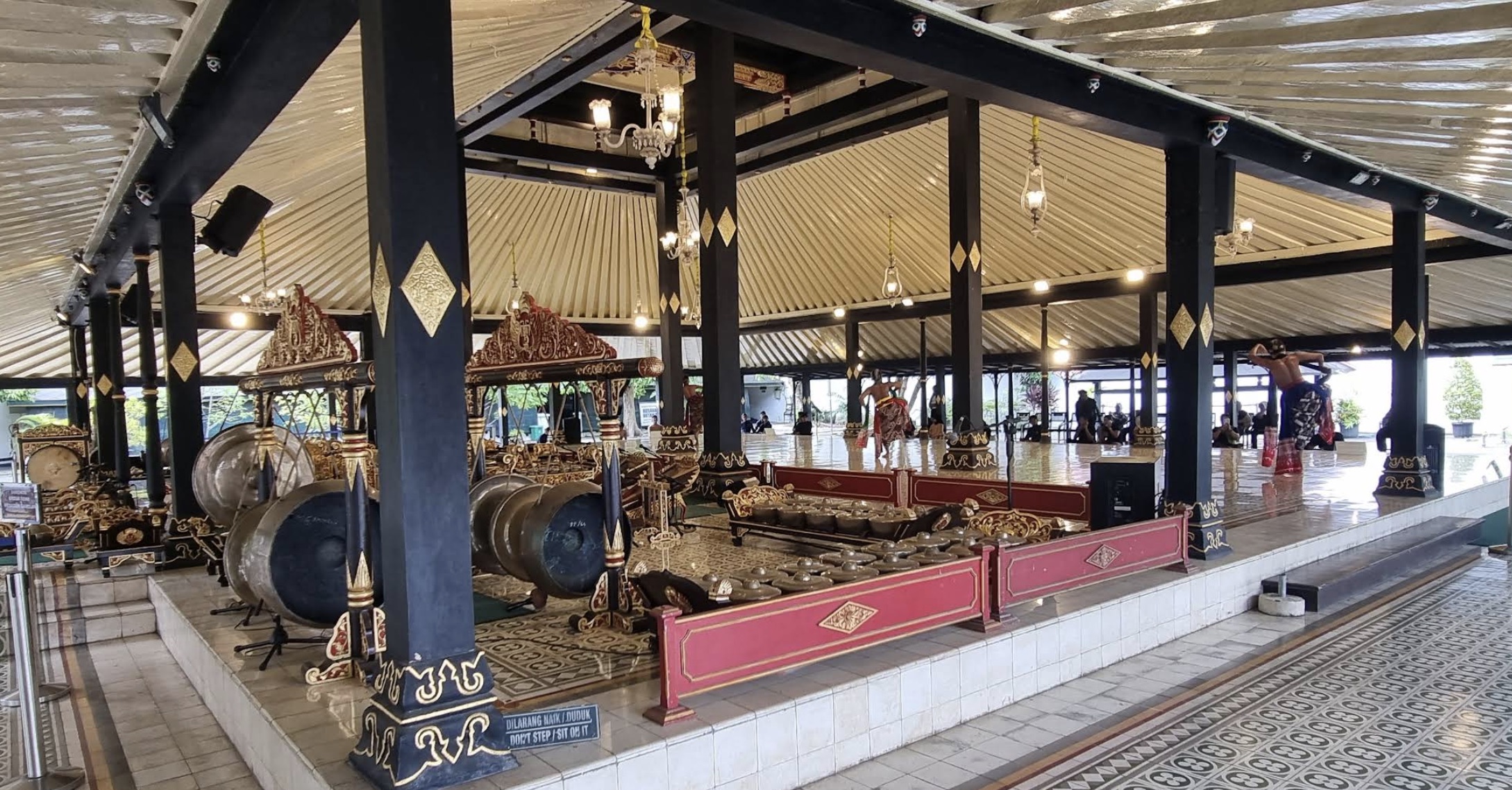
At the heart of the Sultanate stands the Keraton — the Yogyakarta sultan palace complex.
But calling it a palace feels insufficient. The Keraton is not just a residence. It is a philosophical blueprint.
The layout of the palace aligns with Mount Merapi in the north and the Indian Ocean in the south. This axis is not accidental. It represents a cosmic balance between the human realm and the spiritual world.
The Sultan is positioned not merely as a political leader, but as a symbolic mediator between these forces.
Which sounds dramatic — and it is.
But in Javanese culture, symbolism is not theatrical. It is structural.
The throne room, the courtyards, the gates — all are arranged with intention. Power is not displayed through extravagance alone, but through order.
Hamengkubuwono: A Name That Echoes
The title “Hamengkubuwono” translates roughly to “The One Who Holds the World in His Lap.”
Which is either deeply poetic or a very ambitious job description.
From Hamengkubuwono I, the founder, to Hamengkubuwono X today, the line of succession has carried not just authority, but expectation.
One of the most defining moments in the Sultanate’s modern history came during Indonesia’s struggle for independence.
When the Republic declared independence in 1945, Yogyakarta did not hesitate. Sultan Hamengkubuwono IX pledged support to the new republic — politically and financially.
At one point, when Jakarta was under threat, Yogyakarta became the temporary capital of Indonesia.
Imagine that.
A traditional sultanate backing a modern republic. A monarch supporting democracy. A palace funding revolution.
History is rarely simple.
Power Without Noise
Unlike monarchies obsessed with spectacle, the Yogyakarta Sultanate practices a quieter form of authority.
There are no excessive parades. No global tabloids tracking royal outfits. No palace scandals trending on social media — at least not in the same dramatic fashion as elsewhere.
Instead, the Sultanate maintains influence through cultural preservation.
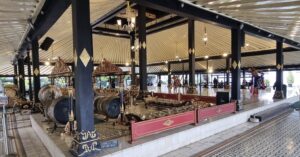
Traditional dances are performed regularly. Gamelan music echoes through palace halls. Batik patterns are safeguarded as intellectual heritage. Ceremonies follow centuries-old rituals.
It’s not nostalgia.
It’s continuity.
The Special Region: Privilege with Responsibility
Yogyakarta holds a unique status in Indonesia: it is a Special Region.
This means the Sultan automatically serves as governor without direct election — a privilege rooted in historical contributions to the republic.
Of course, in modern democratic discourse, this arrangement invites questions.
Is hereditary leadership compatible with contemporary political ideals?
Should tradition outweigh electoral process?
These are valid questions.
But what makes Yogyakarta interesting is not the absence of debate — it’s the management of it.
Public discourse exists. Criticism exists. Yet the institution remains stable.
Perhaps because the Sultanate is not perceived merely as a political mechanism, but as a cultural anchor.
Rituals That Shape Identity
Every year, the Sultan participates in traditional ceremonies that connect the palace to the people.
One of the most well-known is the Grebeg ceremony, where offerings are paraded from the palace to the Grand Mosque and distributed among the public.
It’s symbolic. The palace gives. The people receive.
But it’s also reciprocal. The Sultanate derives legitimacy from cultural relevance.
In Javanese philosophy, leadership is not about domination. It is about harmony.
And harmony is not loud.
It is deliberate.
Between Myth and Modernity
Like any long-standing institution, the Sultanate exists partly in myth.
Stories circulate about mystical connections between the Sultan and the Queen of the South Sea. Legends intertwine with governance. Spiritual symbolism blends with administrative function.
From a purely rational perspective, this might seem contradictory.
But from a cultural perspective, it makes sense.
Because societies are not built on logic alone. They are built on shared stories.
The Yogyakarta Sultanate understands this.
It doesn’t aggressively modernize its image to appear relevant. It trusts that relevance will follow continuity.
Youth, Tradition, and the Future
Today’s Yogyakarta is filled with students, artists, startups, coffee shops, and Wi-Fi signals strong enough to upload existential poetry at 2 a.m.
And yet, amid this modern energy, the Sultanate still stands.
Young people may debate policy. They may challenge traditions. They may reinterpret Javanese identity.
But they do so in a city whose heartbeat still echoes from the Keraton.
Perhaps that’s the secret.
The Sultanate doesn’t demand uniformity. It provides a reference point.
You can move forward — but you know where you began.
A Monarchy That Listens
It would be naive to assume that the Sultanate has never faced controversy. Land management issues, succession debates, administrative reforms — these are real matters.
But what distinguishes the institution is its adaptability.
The current Sultan has made adjustments to succession rules, including opening possibilities for female leadership — a significant shift in a traditionally patriarchal system.
That decision alone suggests that tradition, in Yogyakarta, is not static.
It evolves.
Slowly. Carefully. But deliberately.
Why It Still Matters
In a global era where institutions rise and fall with public approval ratings, the Yogyakarta Sultanate endures.
Not because it resists change.
Not because it dominates opposition.
But because it occupies a space beyond simple governance.
It is history embodied.
It is philosophy in architecture.
It is authority softened by art.
And maybe that is why it continues to resonate.
Because in a fast-moving world, stability feels rare.
And in a noisy political landscape, quiet legitimacy feels powerful.
A Final Reflection
Stand in the courtyard of the Keraton. Listen to the faint rhythm of gamelan instruments. Watch sunlight filter through ancient wooden beams.
You might realize something unexpected.
Power does not always announce itself.
Sometimes, it sits calmly in a yogyakarta sultan palace aligned with a volcano and an ocean — holding the world, metaphorically, in its lap.
The Yogyakarta Sultanate is not merely a remnant of the past.
It is a conversation between past and present.
A reminder that identity can be preserved without being frozen.
That leadership can be symbolic without being superficial.
And that sometimes, the most enduring systems are not the loudest ones — but the ones that understand how to balance poetry and power.